Layer 2 Overview
What is Layer 2 (Second-Layer Scaling)
Layer 2 refers to solutions used in blockchain technology and network protocols to scale the base blockchain (Layer 1). Their purpose is to improve transaction speed, reduce transaction fees, and enhance network scalability and efficiency.
Both Ethereum and Bitcoin are Layer 1 blockchains, as they are the underlying foundations upon which various Layer 2 networks are built. Typical examples of Layer 2 projects include "Rollups" on Ethereum and the Lightning Network on Bitcoin. All user transaction activities on these Layer 2 projects can ultimately be settled back to Layer 1. However, there is no strict definition of Layer 2, but it typically requires inheriting security from Layer 1, making it one of the more secure categories among off-chain scaling solutions.
Ethereum's exploration of Layer 2 is relatively mature, having developed multiple different types of Layer 2 solutions, each with its own trade-offs and security models. Taking Rollups as an example, the working principle is shown in the diagram below:
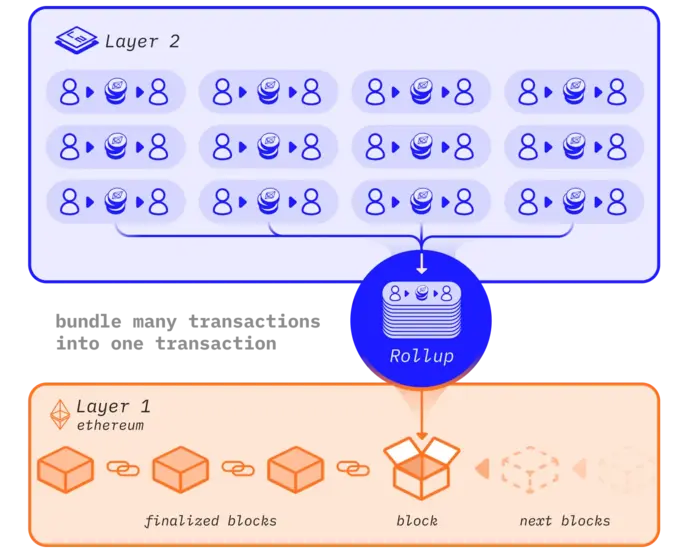
Rollups bundle hundreds of transactions into a single transaction on Layer 1. Therefore, the L1 transaction fee is shared among each transaction in the Rollup, making each Layer 2 transaction cheaper. Transaction data from the Rollup is submitted to Layer 1, but execution is completed separately within the Rollup. For more information, see the Rollup encyclopedia.