Taproot
Taproot
Taproot is an upgrade to the Bitcoin network that went live on November 14, 2021. Since the introduction of SegWit (Segregated Witness), Taproot and Schnorr signatures have been among the most anticipated Bitcoin technology upgrades. Taproot aims to improve the way Bitcoin scripts operate, enhancing privacy, scalability, and security. When combined with the related Schnorr signature upgrade, Taproot is expected to achieve these goals and more.
What Is the Bitcoin Taproot Upgrade?
Taproot is a soft fork that optimizes Bitcoin scripts, improving privacy, efficiency, and the network's ability to handle smart contracts. It is widely recognized as the most significant Bitcoin upgrade since the 2017 SegWit upgrade.
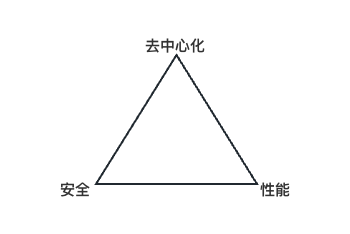
Within the blockchain trilemma, the Taproot upgrade primarily addresses two aspects. One is to further enhance anonymity, thereby improving security; the other is to improve transaction performance by modifying the data structure of blocks themselves, reducing unnecessary data overhead in transactions.
The Taproot upgrade consists of 3 different Bitcoin Improvement Proposals (BIPs), including: Taproot, Tapscript, and at its core, a new digital signature scheme called "Schnorr Signatures." Taproot is designed to bring numerous benefits to Bitcoin users, such as improved transaction privacy and reduced transaction fees. It will also enable Bitcoin to execute more complex transactions, broadening its use cases and competing with Ethereum, particularly in smart contract functionality and network support for Decentralized Finance (DeFi) and Non-Fungible Tokens (NFTs).
The Taproot proposal was originally introduced by Bitcoin Core developer Greg Maxwell in January 2018. In October 2020, Pieter Wuille created a code pull request to merge Taproot into the Bitcoin Core codebase. For full deployment of the upgrade, node operators needed to adopt Taproot's new consensus rules. The proposal ultimately received 90% miner support and was officially activated on November 14, 2021, at block 709,632.
How Taproot Works
Schnorr Signatures (BIP340)
Schnorr signatures improve the speed and security of transaction verification on the Bitcoin network. The signature scheme is based on cryptography and was developed by German mathematician and cryptographer Claus Schnorr. For many years, Schnorr's algorithm was protected by a patent, which officially expired in 2008. Schnorr signatures offer numerous advantages and are particularly known for their simplicity and efficiency in generating short signatures.
Bitcoin's creator, Satoshi Nakamoto, adopted a signature scheme called the "Elliptic Curve Digital Signature Algorithm (ECDSA)." ECDSA was chosen over Schnorr signatures because it was widely used, well-understood, secure, stable, lightweight, and open-source.
However, the development of the Schnorr Digital Signature Scheme (SDSS) may mark the beginning of a new generation of signature technology for Bitcoin and other blockchain networks.
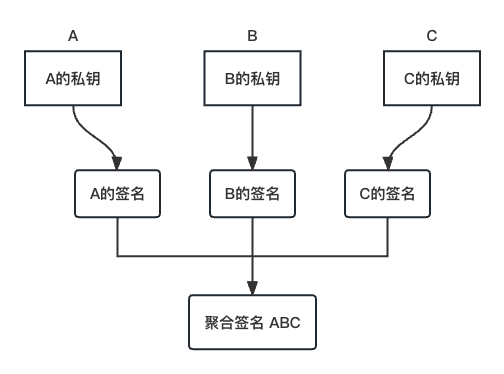
A core advantage of Schnorr signatures is the ability to extract multiple keys in complex Bitcoin transactions and generate a unique signature. This means that signatures from multiple parties in a transaction can be aggregated into a single Schnorr signature, a process called "signature aggregation."
In practice, Taproot can make it completely invisible that a Bitcoin script is running. For example, with Taproot, whether it's a Lightning Network channel transaction, a peer-to-peer transaction, or a complex smart contract transaction, different Bitcoin payment methods appear identical. Observers monitoring these transactions would only see peer-to-peer transactions. However, it is worth noting that this does not change the fact that the sender's and final recipient's wallet information remains exposed.
Taproot (BIP341)
Taproot, which gives the Taproot upgrade its name, was built on the foundation of the 2017 SegWit upgrade and uses Merklized Alternative Script Trees (MAST) to expand the amount of transaction data in Bitcoin blocks.
Transactions in the Bitcoin network are secured by public and private keys. To spend digital assets in a wallet, users must first provide a signature proving their true ownership before transferring tokens. In addition to single-signature transactions, transactions in the Bitcoin network can be made more complex through features such as releasing timelocks and requiring multisignature (multisig).
However, complex multisignature transactions require multiple inputs and signature verifications, adding significant data to the blockchain and slowing down transaction speeds. Furthermore, transaction information automatically displayed on the blockchain can expose sensitive data of address owners.
With MAST integration, a single MAST transaction can represent multiple scripts, thereby reducing the number of scripts and verifications required. When complex Bitcoin transactions are sent to MAST, the Merkle tree is not needed to process transactions. MAST only allows the execution conditions of a transaction to be committed to the blockchain, rather than sending all the details. This significantly reduces the amount of data the network needs to store. This not only improves the scalability and efficiency of the Bitcoin blockchain but also provides Bitcoin users with greater privacy.
Tapscript (BIP342)
Tapscript is an upgrade to Bitcoin's scripting programming language that facilitates the other two Bitcoin Improvement Proposals (BIPs). It is a collection of opcodes - instructions that specify how transactions should be executed. With more available block space, new features become more flexible, enabling the Bitcoin network to support and create smart contracts in the future.
How Does Taproot Benefit Bitcoin?
As discussed above, Taproot can significantly enhance Bitcoin's privacy and broaden its use cases. Other potential benefits include:
-
Improving network scalability by reducing the amount of data transmitted and stored on the blockchain;
-
Processing more transactions per block (increasing the Transactions Per Second (TPS) rate);
-
Reducing transaction fees.
Another advantage of Taproot is the elimination of signature malleability, a known security risk in the Bitcoin network. In brief, from a technical standpoint, signature malleability means that signatures can be modified before a transaction is confirmed. Through this method, attackers can create a false impression that a transaction never occurred. This would expose Bitcoin to the notorious double-spending problem, undermining the integrity of the distributed ledger.
Why Is the Taproot Upgrade Important?
Activating Taproot enhances Bitcoin network functionality, enabling fast and reliable transactions. Before Taproot, the Bitcoin protocol was still in its Layer 1 development phase, while other protocols such as Ethereum had already taken the lead in Layer 2 and DApp development. After the upgrade, Bitcoin opened the door to smart contract deployment, expanded use cases, and began catching up with future trends in the NFT and DeFi markets.
As Bitcoin network efficiency increases and fees decrease, both transaction volume and scope of applications will benefit. Furthermore, Bitcoin ensures user transaction privacy, making it a more competitive privacy coin in the market.
Reference: https://academy.binance.com/zh/articles/what-is-taproot-and-how-it-will-benefit-bitcoin?&utm_campaign=web_share_copy